Leap 1 – Week 1 – Activities
1. Physical
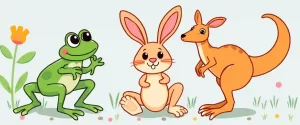
Activity Name: Hop like animals (frog, bunny, kangaroo)
Description: Children pretend to be different animals and hop around like them. This playful movement strengthens leg muscles, improves balance, and builds coordination — all while having fun. Here is how it works:
-
Parent/teacher shows how each animal hops:
-
Frog: squat low → big forward jumps
-
Bunny: small, quick hops with hands near chest
-
Kangaroo: high jumps with hands on waist or in front
-
-
Play music and call out an animal name.
-
Child switches movement according to the animal.
-
Add fun variations:
-
Hop to a specific colour mat
-
Hop to collect soft toys
-
Hop in a zig-zag line
-
-
End with a cool-down stretch while pretending to be a sleepy animal resting.
Children enjoy imaginative play while building core motor skills.
Objective:
-
To strengthen leg and core muscles.
-
To improve balance, body control, and coordination.
-
To increase endurance and gross motor strength.
-
To develop listening skills and ability to follow instructions.
-
To encourage imagination and fun movement.
Frequency: 2–3 times per week (5–7 minutes each session)
2. Emotional & Social
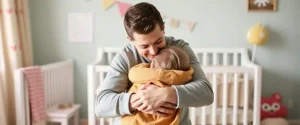
Activity: Family Hug Time
Description: Once a day, the family shares a group hug or gentle hug routine to help the child feel loved, safe, and connected. For young children, physical affection builds trust, emotional security, and bonding. Here is how it works:
-
Choose a fixed time (morning, after school, or bedtime).
-
Parent says a simple cue like:
-
“Hug time!”
-
“Family cuddle time!”
-
-
Give a gentle hug for 5–10 seconds.
-
Add an optional positive sentence during the hug:
-
“We love you.”
-
“You are special.”
-
“We are happy together.”
-
-
End with a smile or a high five.
The moment should always be calm, warm, and positive — never forced.
Objective:
-
To build emotional security and attachment.
-
To help the child feel loved, protected, and valued.
-
To promote positive social bonding within the family.
-
To reduce feelings of stress, fear, or separation anxiety.
-
To create a safe emotional foundation for confidence and good behavior.
Weekly Frequency: Daily (1–2 minutes)
3. Linguistic
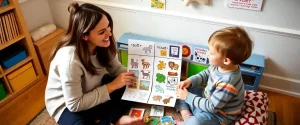
Activity Name: Story Time with Picture Books
Description: Parent/teacher reads picture books aloud to the child while showing the illustrations. The child looks at the pictures, listens to the story, and identifies objects, characters, and actions. Story Time builds vocabulary, listening skills, and early comprehension through enjoyable storytelling. Here is how it works:
-
Choose a short picture book with big and colourful images.
-
Sit with the child so they can clearly see the pictures.
-
Read slowly with expression and gestures.
-
Pause often and ask simple questions:
-
“What animal do you see?”
-
“Where is the red ball?”
-
“Who is happy in the picture?”
-
-
Encourage the child to repeat words or imitate sounds:
-
“Moo!” (cow)
-
“Choo-choo!” (train)
-
-
End the story by asking one recall question:
-
“Who was in the story?”
-
“What happened at the end?”
-
Story Time becomes a warm bonding moment while strengthening language development.
Objective:
-
To build vocabulary using familiar objects, animals, and actions.
-
To improve listening and comprehension skills.
-
To support sentence formation through repetition and conversation.
-
To encourage early literacy interest and love for books.
-
To boost confidence in expressing thoughts and answering questions.
Frequency:
-
3–4 times per week (10 minutes per session)
4. Cognitive
Activity: Sorting Objects by Colour
Description: Children sort everyday objects into groups based on colour. Objects can include blocks, crayons, bottle caps, toys, buttons, pom-poms, cups, or flashcards.
The activity improves early thinking skills by helping children notice similarities and differences. Here is how it works:
-
Place 3–4 bowls or trays on the floor.
-
Put mixed coloured objects in one big basket (e.g., red, blue, yellow, green).
-
Say:
-
“Put all the red things here.”
-
“Can you find blue things now?”
-
-
Allow the child to place objects in the matching bowl.
-
Add fun variations:
-
Race Timer: sort objects before the music stops
-
Pick by colour: parent calls out a colour to pick next
-
Name & Count: after sorting, count how many in each colour
-
-
Celebrate success:
-
“You matched all the colours correctly—great thinking!”
-
This turns classification into a fun and visual learning experience.
Objective:
-
To develop colour recognition.
-
To improve visual discrimination (spotting differences).
-
To build early categorization and logical thinking skills.
-
To support attention, concentration, and hand–eye coordination.
-
To introduce early maths concepts (sorting, grouping, counting).
Frequency:
-
2–3 times per week (5–7 minutes per session)